Electric vs Gas Kart Boat: Which Should You Buy in 2026?
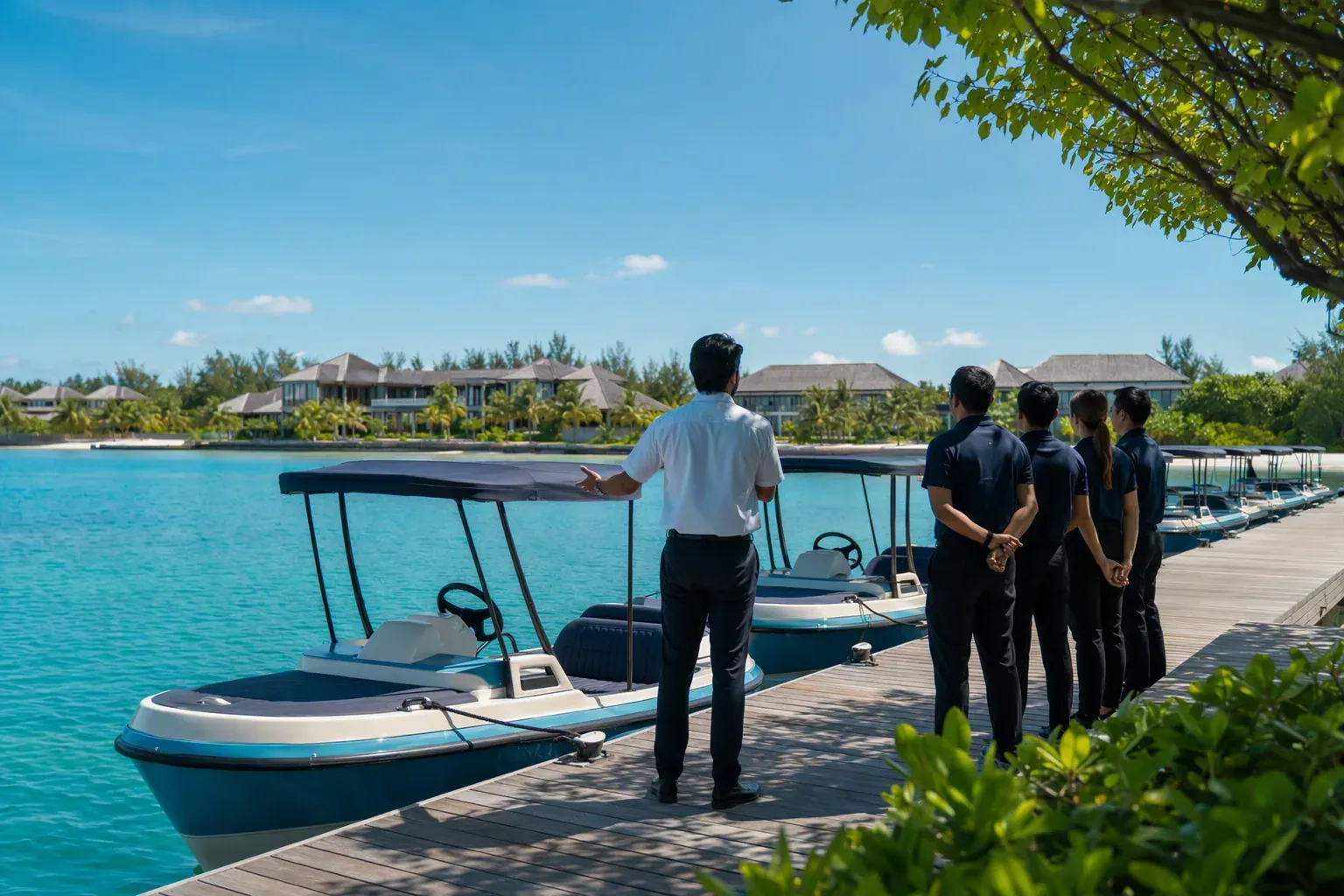
Quick answer: For resort, water park, and pool-side rental operations, the electric kart boat wins on running cost (roughly $0.20 vs $1.50+ per operating hour at typical prices), noise, fumes, and where regulators are heading — California's CARB keeps tightening emission rules for spark-ignition watercraft, and a growing set of European lakes now prohibit combustion engines outright. Gasoline keeps two honest advantages: faster refueling (minutes vs charging cycles, unless your fleet uses tool-free battery swaps) and higher listed top speeds (one 2026 gasoline model lists ~74 km/h vs 40–60 km/h for mainstream electric). This page compares both across nine decision factors, then maps each to the buyer profile it actually fits. Kart boats now ship in both powertrains, and this is a real two-way choice: gasoline models are real products with real advantages, not a strawman. The comparison below uses listed specifications from 2026 models of both types — including a current gasoline kart boat listing 7.5 L/h of fuel burn at a 40-knot top speed — so you can see the trade-offs as they actually stand.
The Nine Factors That Actually Decide This
1. Energy cost per operating hour
Electric kart boats charge from the grid: a full charge of a typical 72V-class pack costs well under a dollar at commercial electricity rates, which works out to roughly $0.20 per operating hour. A gasoline kart boat burning 7.5 L/h at typical pump prices costs several dollars per hour — an order-of-magnitude gap that compounds across a season. For a fleet running 6 hours a day, the fuel-vs-electricity line alone can differ by four figures (USD) per month. Our kart boat price guide covers purchase prices; this is the line item most buyers forget to model.
2. Refueling: the one place gasoline clearly wins
A gas boat refuels in two minutes. An electric boat recharges in 2.5–4 hours with a standard charger — unless your fleet uses tool-free battery swap architecture, in which case a trained operator exchanges packs at the dock in seconds and the boat returns to rotation immediately. If you cannot stage charged packs (no dock space, no staff), gasoline's refueling speed is a legitimate operational advantage. With swap infrastructure, it largely disappears — which is why we treat the swap rack as core fleet equipment rather than an accessory. And here's the honest edge case: if your site is off-grid, or your electrical service can't support a charge rack and you can't fund the swap infrastructure either, buy gasoline. Don't let a supplier talk you into electric because "it's the future." A boat that can't charge is a very expensive planter. We would rather lose the sale than put a fleet into that situation.
3. Noise and guest experience
Electric kart boats run quiet enough to hold a conversation from the dock; guests ride in resort pools and lagoons without disturbing sunbathers two meters away. A gasoline engine at 40 knots is loud above water and louder below it. If your venue puts boats near hotel rooms, restaurants, or other guests' water activities, noise alone often decides the question.
4. Emissions and the regulatory horizon
Electric produces no exhaust at the waterline; gasoline engines do, and regulators are increasingly writing that fact into law. California's air regulator CARB keeps tightening emission standards for spark-ignition marine watercraft, and France's Verdon reservoirs are already electric-only by statute — at one of them, the rules go as far as barring rental businesses from operating thermal craft, so the commercial fleet there is electric by law, not by choice (we walk the actual legal instruments in the Mediterranean fleet planning guide). A gasoline fleet bought in 2026 faces a shorter regulatory runway in exactly the markets (US West Coast, EU lakes) where rental demand is strongest.
5. Maintenance profile
A gasoline kart boat carries the full combustion maintenance stack: engine oil, spark plugs, fuel filters, carburetor or injection service, and aggressive winterization. An electric boat's drivetrain maintenance is close to zero; its main consumable is the battery pack, which ages with every cycle and needs disciplined charging practice. The honest framing: gasoline spreads maintenance across many small line items, electric concentrates it into one large, plannable one. Our battery & maintenance guide walks the electric side in detail. Which leads to the conclusion most first-time buyers get backwards: with an electric kart boat, the hull is close to a commodity — the battery pack is the asset. You are really buying a managed inventory of charge cycles. Fleets that treat packs as an afterthought — mixed brands, no charging log, no periodic capacity testing — end up writing off their drivetrain within two seasons. Fleets that rotate packs and keep a log run them far longer. The boat holds the water; the pack book holds the margin.
6. Top speed and performance
Listed gasoline models are faster on paper: a 2026 gasoline kart boat advertises ~74 km/h (40 knots) against 40–60 km/h for mainstream electric units. Here's the correction I'd offer after watching this market for a while: stop reading listed top speed as a number you will ever use. One independent review called a Chinese kart boat's claimed 52 km/h "far-fetched," and a buyer on Reddit reported a budget electric unit topping out at 2 mph in real water. Even when the number is honest, most venues govern boats to 25–35 km/h anyway — family rental at that speed is safer, easier for beginners, and gentler on batteries. Chasing the higher listed figure is how buyers end up paying for performance they regulate away on day one. If you operate a competitive racing circuit where top-end speed is the product itself, gasoline keeps a real case.
7. Weight, handling, and venue fit
Gasoline hulls run heavier (one 2026 model: 197 kg net plus fuel) and demand deeper water (0.8 m minimum listed). Electric kart boats typically run lighter per unit and operate in shallower pool environments — and lithium packs make them front-heavy by design, which is why hull design and BMS placement matter more here (see the motor power & payload guide). For pools, rooftop venues, and shallow lagoons, electric is frequently the only option that fits at all.
8. Fueling infrastructure and safety
Gasoline needs fuel storage on site — jerry cans, pumps, and fire separation from guest areas. Electric needs outlets and a charge rack. Lithium batteries carry their own safety story: on r/boating, a real buyer thread is titled "Are electric boats safe?", and in buyer discussions of Chinese brands the first question is reliably some version of "is this a scam?" Those questions — not horsepower — are what an electric fleet has to answer first, which is why battery certification, BMS quality, and kill-switch function belong on your pre-shipment inspection list — and why we publish our battery supplier documentation rather than asking buyers to take it on faith.
9. Purchase price and availability
Electric kart boats are the volume category: B2B listings clustered between $2,388 and $6,899 in mid-2026, with wide configurability (seats, power tiers, drift and racing variants — see the electric kart boats lineup). Gasoline kart boats exist but with far fewer factory listings and less configuration choice; expect pricing to vary more and quote-to-quote. The full per-model price breakdown lives in the price guide linked above.
Which One Fits Your Operation?
So which fits yours? The table is the honest version, edge cases included:
Your situation | Better fit | Why |
|---|---|---|
Resort, hotel waterfront, or pool venue | Electric | Noise, fumes, shallow water |
High-throughput rental, no swap infrastructure | Gasoline, or electric + swap rack | Refueling speed |
Competitive racing circuit | Gasoline has a case | Listed top speed |
US West Coast or EU inland waters | Electric | Regulatory direction |
Budget-constrained first fleet | Electric | Purchase price + running cost |
| Remote site without reliable grid power | Gasoline | No charging dependency |
FAQ
Are electric kart boats slower than gas? Listed top speeds run lower for electric (40–60 km/h vs ~74 km/h for a 2026 gasoline model). In rental practice most venues govern speeds well below either number for safety. How much does it cost to run each? Electric: under a dollar per full charge, roughly $0.20 per operating hour. Gasoline: a listed 7.5 L/h burn means several dollars per hour at pump prices — the single largest running-cost gap between the two. Do electric kart boats work for full-day rental? Yes, with pack rotation: tool-free battery swaps keep boats in rotation through peak hours, while depleted packs charge on a rack. Without swap infrastructure, plan around 2.5–4 hour charging cycles. Is gasoline more dangerous than lithium? Both carry real hazards — gasoline is flammable and needs on-site fuel storage; cheap lithium packs can suffer thermal runaway. The differentiator is documentation and build quality: certified cells, a real BMS, and tested kill switches, all verifiable at pre-shipment inspection. Will gasoline kart boats be banned? Not broadly today, but the direction is set: emission rules for spark-ignition watercraft keep tightening (California's CARB SIMW standards are the example to watch), and France's Verdon reservoirs already run electric-only statutes — one bars rental operators from thermal craft outright. For a 5+ year fleet horizon in those markets, electric protects both resale value and permit eligibility. Which should a first-time buyer choose? For the overwhelming majority of resort, park, and rental buyers: electric, with a swap rack sized to your fleet. Choose gasoline only for racing-focused venues or sites genuinely off the grid.
Bottom Line
The gasoline kart boat is a real product with real strengths — refuel speed and listed top speed — but for the venue and rental buyers who make up most of this category's demand, the electric kart boat wins the factors that repeat every single operating day: energy cost, noise, maintenance simplicity, and regulatory durability. Compare configurations in the electric karting boat lineup, model your fleet economics in the commercial ROI worksheet, or read the complete kart boat guide for the full picture. Specification figures cited for 2026 gasoline and electric models come from public manufacturer listings and third-party compilations collected July–August 2026. Speed claims cited as "claimed vs. measured" come from third-party reviews and public buyer forums collected July 2026. Regulatory information summarizes stated policy directions and is not legal advice — confirm requirements with your local maritime authority.
Get a Quote for Your Kart Boat Business
Tell us what you need — OEM/ODM specs, quantity, target market. Our team replies within 24 hours.
Prefer a quick chat?
Chat on WhatsAppFree B2B resources
Buyer guides, ROI calculators, customs checklists, and case studies — built on direct factory manufacturing experience.