Kart Boat Import Duty & HS Code Guide (2026)
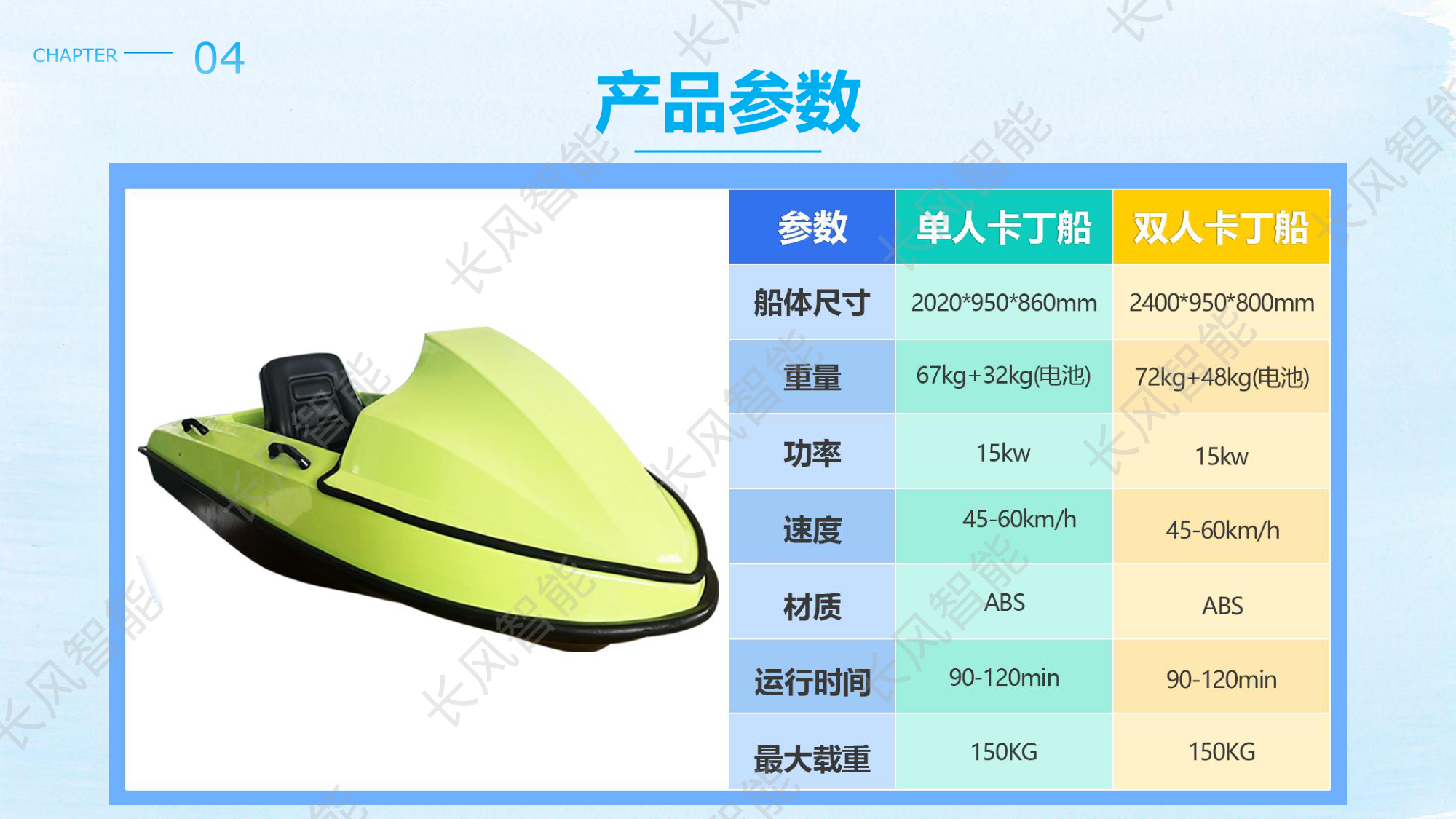
Two importers buy visually identical electric kart boats from China. One clears EU customs at 0% duty. The other books the same boat into the Philippines and gets quoted a landed cost 23 percentage points higher than a neighbor who declared the identical product under a different heading. Nothing about the boats changed — only the ten-digit code on the entry. Import duty is the single most underestimated line in a kart boat budget: our market monitoring across 12 destination markets (July 2026) found total landed-cost add-ons ranging from +6% to +86% on top of the factory price, and the biggest single lever inside that spread is the customs classification itself. This guide explains why kart boats sit at the intersection of two HS headings with very different duty outcomes, walks through the landed-cost formula, gives a duty-and-VAT snapshot for 12 markets, deep-dives the US and the EU, and shows how to lock your classification with a binding ruling before the cargo ships.
Key Takeaways - Kart boats classify under either HS 8903 (pleasure boats) or HS 9508 (water-park and fairground amusements). Water-park amusements sit in heading 9508 (EU CN), where the third-country duty is 0%, while a private-ownership leisure boat typically travels under 8903.99 — the exact ten-digit code for arena boats is a TARIC lookup, or better a binding ruling, away. - The duty gap is real: under 9508, the EU third-country duty is 0%; under 8903.99, a China-origin boat entering the US carries roughly 1% MFN (subheading-dependent) plus Section 301 (+25%) plus current IEEPA layers — a combined stack that was running around 46–56% in additional duties as of September 2026, before freight and clearance. - Same boat, same market, different declaration: in the Philippines, declaring under 9508 keeps the landed add-on near +18%, while an 8903 declaration can push it past +40% once consumption tax applies. - You are not required to guess. The US (CBP binding rulings) and the EU (EBTI) both issue advance classification decisions that bind customs to your declared code. A written ruling before shipment is the cheapest insurance in this trade. - Every rate in this page carries a collection or verification date. Tariff policy in 2025–2026 changes quarterly; always re-verify against the official database for your market before signing a contract.
Why do kart boats have two possible HS codes?
Most products have one obvious heading. Kart boats — sold as kart boats, bumper boats, water go-karts, or mini jet boats — straddle the boundary between two legitimately different product families:
| HS 8903.99 (pleasure boats) | HS 9508 (water-park / fairground amusements) |
|---|---|---|
Heading scope | Vessels for pleasure or sports; 8903.99 covers motorboats "other" (including outboard and inboard leisure boats; inflatable variants have their own subheading) | Travelling circuses, amusement park rides, water park amusements, fairground amusements |
Typical use case | Private owners, resort guest recreation, individual leisure | Fixed water-park attractions, pool-based bumper-boat arenas, operator-run amusement venues |
EU position (CN 2022+, in force 2026) | Standard pleasure-boat nomenclature | Heading 9508 explicitly covers "water park amusements" — the category pool-arena bumper boats belong to; confirm the exact CN code via TARIC or a binding ruling |
US duty signal (8903.99, as of Sep 2026) | ~1% MFN for the outboard-motorboat subheading (8903.99.21), plus Section 301 +25% (List 3) for China origin | Heading 9508 generally carries a lower or zero general rate in many markets, but US classification of an amusement-pool boat is a ruling question, not an assumption |
| Risk profile | Higher duty in most markets; expected for private-lease and resale-to-consumer scenarios | Lower duty in many markets; expected for water-park/fixed-arena buyers — but misdeclaring a private-use boat under 9508 is a compliance risk, not a savings plan | The EU example matters more than it looks. When a customs nomenclature explicitly names "bumper boats" under a heading, that becomes the anchor point most EU member-state customs officers will check first for pool-operated boats — and it is why an EU buyer of arena-style bumper boats should expect the 9508 path, while the buyer of a self-drive leisure kart boat used on open water should expect the 8903 path. The deciding factors customs officers actually weigh are not the boat's shape but its intended use and operational context: where it operates (open water vs a defined pool arena), who operates it (private individual vs a commercial venue selling rides), and how it is marketed (leisure craft vs amusement ride). Two honest declarations can differ — a resort that runs kart boats as free guest recreation and a water park that sells timed bumper-boat sessions are genuinely different commercial realities.
Key insight: the classification question is not "which code saves money" but "which code matches the verifiable use case." Declaring an open-water leisure boat under 9508 to chase a 0% rate is misdeclaration — customs can reclassify, collect the difference, and add penalties years after clearance.
How do you calculate kart boat landed cost?
Use this structure for every market comparison. Ratios vary, the math does not: Landed cost = factory price × (1 + import duty + VAT/sales tax) + ocean freight + clearance & docs + inland transport + compliance costs Four practical notes the formula hides:
- Duty and VAT compound on different bases. In most markets duty applies to the customs value (typically CIF), then VAT applies to (customs value + duty). A "20% VAT" on a dutiable boat costs more than 20% of the invoice.
- Ocean freight swings more than most duties. A kart boat and battery pack in crate form typically occupies 2–2.5 CBM; at 2026 freight levels the shipping line item can rival the duty itself. The USTR port-fee saga (below) is a freight-cost story, not a duty story.
- Compliance is market-specific and front-loaded. Think type-approval paperwork (CE components for the EU market, SNI for Indonesia batteries, NOM per model for Mexico — each with its own lead time and lab cost, outside customs duty entirely).
- Clearance fees are small but real — broker fees, port handling, and for lithium-battery cargo, the documentation burden described in our battery shipping compliance topic (UN 38.3 test summary, MSDS, transport documents).
What does a kart boat cost to land, by market?
Collected July 23, 2026 from tariff schedules and VAT publications; treat as orientation, not quotation. Baseline: $4,000 factory price, ~2–2.5 CBM crated, CIF basis.
Market | Total add-on | Duty / tax composition | Notes |
|---|---|---|---|
Malaysia | +6% | 0% duty (ACFTA) + SST exemption | Lowest-cost entry in the region |
Vietnam | +13% | 0% duty + 8% VAT (temporary rate through Dec 2026) | VAT reverts to 10% in 2027 unless extended |
Thailand | +15% | 0% duty + 7% VAT |
|
UAE | +21% | 5% duty + 5% VAT | Often overlooked; cheaper than the US in duty terms |
Indonesia | +23% | 0% duty + 11% VAT (PPN) + PPh 22 income-tax prepayment | SNI certification on lithium batteries is the real barrier |
Philippines (declared under 9508) | +18% | 0% duty + 12% VAT | 8903 declaration can exceed +40% once 20% consumption tax applies |
EU (DE/IT) | +28–33% | Duty 0% under 9508 (see EU section) + VAT 19–22% | Compliance simplest of the major markets |
UK | +27–30% | Duty ~0% + 20% VAT | UKCA regime currently accepts CE marking evidence for this product family |
Chile | +29% | 0% duty (China–Chile FTA) + 19% IVA | Cleanest customs process in LatAm per operator reports |
Saudi Arabia | +42–49% | 5% duty + 15% VAT + inland freight | SABER (PCoC + SCoC) per shipment adds fixed costs |
Mexico | +48% | 15% duty + 16% IVA | NOM certificate required per model |
| Brazil | +50–86% | ~20% TEC + ICMS + stacked federal taxes + AFRMM surcharge | Verify current Camex ex-tariff windows before quoting | Two readings of this table: first, the freight-adjacent markets (Malaysia, Vietnam, Thailand, UAE) land a boat for half the add-on cost of Latin America; second, the Philippines row is the whole guide in one line — the same physical boat, the same port, and a 22-point swing depending on the heading on the entry.
How much is US import duty on Chinese kart boats?
The US is the most instruction-heavy market right now because three independent policy layers stack on China-origin boats under 8903.99: Layer 1 — MFN base rate. The outboard-motorboat subheading 8903.99.21 lists a 1% general rate; neighboring subheadings differ, so verify your exact ten-digit code in the USITC HTS database rather than assuming. Inflatable-hull variants sit in their own subheading (8903.99.91 in the US schedule); verify its rate separately. Layer 2 — Section 301. China-origin boats under 8903.99 fall on List 3 of the Section 301 action, adding +25% (customs exception code 9903.88.01 on entries). This has been stable since 2019 and is not part of the current truce negotiations. Layer 3 — IEEPA layers (2025–2026, volatile). The February–April 2025 escalation and subsequent truce left China-origin goods carrying an additional 10% "reciprocal" IEEPA tariff plus a 10–20% fentanyl-related IEEPA tariff, held under the US–China arrangement extended through November 10, 2026. Combined with Section 301, a China-origin 8903.99 boat was facing roughly 46–56% in additional duties on top of MFN as of September 2026 (depending on the fentanyl layer then in force) — before freight, clearance, and any state-level sales tax.
Key insight: the November 10, 2026 truce deadline is a contract-date problem. If you are quoting a US-bound fleet with 60–90-day lead times, a delivery that slips past early November 2026 enters a rate environment nobody can promise today. Put a tariff-change clause in your contract — our procurement guide shows where it belongs. The freight footnote: USTR port fees. Separately from cargo tariffs, the USTR action on Chinese-built vessels took effect October 14, 2025 (fees on Chinese-owned, -operated, and -built ships calling at US ports, phased through 2028), and was then suspended for one year as part of the US–China trade arrangement. For a kart boat buyer this is indirect: it moves ocean-freight quotes on China-US lanes, not your duty bill. Re-quote freight when the suspension's expiry approaches.
Is EU import duty really 0% for kart boats?
The EU is the cleanest major market for arena-style bumper boats, and the reasons are structural:
- Duty. Heading 9508 carries a 0% third-country duty rate across its subheadings in the common customs tariff — this held in spot-checks against tariff references in September 2026, and you can confirm the live figure for heading 9508's water-park subheading in the official TARIC database in about two minutes.
- VAT. Import VAT (19% Germany, 22% Italy, and similar across member states) still applies on the duty-paid value. This is recoverable for VAT-registered operators but is real cash-flow at the border.
- No China-specific measures. No anti-dumping, countervailing, or surveillance measures applied to heading 9508 in the checks behind this guide.
- Product compliance is separate from customs. Sub-2.5m electric kart boats fall outside the Recreational Craft Directive's scope; EMC, battery regulation, and general product-safety obligations still apply — our compliance overview maps the file set. One caution: the 0% rate belongs to the 9508 declaration, and the 9508 declaration belongs to the water-park/amusement use case. An EU buyer importing self-drive leisure boats for open-water guest use should take classification advice before defaulting to 9508 on the strength of this table.
Can you lock the HS classification before shipping?
Both major markets offer advance decisions that bind customs to your declared classification. Use them. United States — CBP binding ruling. File through CBP's eRulings portal (program under 19 CFR Part 177). The request package: product description, photographs, technical specifications, and ideally a physical or digital sample. Rulings are searchable in the CROSS database — searching "bumper boat" or "water park amusement" shows how CBP has ruled on similar craft. Complete requests are often decided in weeks; complex classification matters can run several months, so file at contract signing, not at booking. European Union — EBTI (Binding Tariff Information). Any EU importer can request an EBTI from the national customs authority of the member state of import; it is valid EU-wide (typically three years under the Union Customs Code) and binds the tariff classification. Same logic as the US: your documents, their decision, before the cargo moves. Everywhere else. Most markets offer some form of advance ruling (ASEAN members, GCC states, and Latin American customs unions all have variants), with varying formality. Where no formal mechanism exists, a written pre-clearance inquiry through your customs broker — with the product's photos, spec sheet, and intended use attached — still converts a guess into a documented position. Practical sequencing that works: get the supplier's draft declaration with the quotation (a refusal to state an HS code is a supplier-quality signal — see our 12 questions), cross-check it against the destination market's own tariff schedule, and only then decide whether the ambiguity is big enough to justify a formal ruling. The Philippines math (+18% vs +40%) makes that decision easy.
Which classification mistakes cost importers the most?
- Accepting the supplier's code without a destination-market check. HS codes harmonize at six digits; everything below that is national, and the Chinese export declaration is not binding on the importing country's customs.
- Chasing the low-duty code. 9508's 0% is tempting for every buyer, but a private-lease boat declared as a water-park attraction invites reclassification, back-duty, and penalties. Declare the use you can document.
- Forgetting consumption taxes behind the duty. The Philippines case: 0% duty under 9508 but a 20% consumption tax under the alternative path — the headline duty rate is not the landed-cost rate.
- Treating freight tariffs as product tariffs. The 2025 USTR vessel-fee action raised freight-quote anxiety on China-US lanes, but it never applied to your boat's duty line — and it is currently suspended. Price them as separate risks.
- Ignoring the truce calendar. The current IEEPA stack is a truce artifact with a November 10, 2026 horizon. Contract-stage: allocate the tariff-change risk explicitly, per the clause structure in our pre-shipment inspection checklist.
FAQ
What is the HS code for a kart boat? There is no single code. Electric kart boats for private leisure use typically enter under 8903.99 (pleasure boats, other), while pool-arena bumper boats fall under 9508 (water park amusements sit in this heading); confirm the exact subheading via TARIC or binding ruling. The six-digit heading is international; the ten-digit code and duty outcome are set by the importing country. Confirm with a binding ruling for shipments that matter. How much is import duty on kart boats from China? As of September 2026: the EU applies 0% under 9508 (plus 19–22% VAT); the US applies roughly 1% MFN plus Section 301 +25% plus current IEEPA layers (~46–56% combined additional duties) under 8903.99; FTA markets like Malaysia, Vietnam, and Thailand apply 0% duty with low VAT. The full 12-market table is above — each rate carries its collection date, and US rates in particular move with the trade-policy calendar. Do I pay VAT on imported kart boats? Yes, in almost every market — typically 5% (Gulf) to 22% (parts of the EU), applied to the customs value plus duty. VAT-registered businesses in the EU and UK generally recover it; in most other markets it is a final cost. Budget it as cash-out at the border regardless. Is a bumper boat a boat or an amusement ride for customs? Both headings are defensible, and the honest answer depends on documented use: open-water leisure craft → 8903; pool-arena amusement operation → 9508 (the EU explicitly names bumper boats there). If your operation could be read either way, a binding ruling converts the ambiguity into a fixed, defensible position. Can I get a pre-shipment decision on my classification? Yes. The US CBP binding ruling program (via eRulings, under 19 CFR Part 177) and the EU's EBTI both issue decisions that bind customs before import. File with photos, specs, and use description; expect weeks for simple cases and longer for complex ones. Start at contract signing, not vessel booking. Will US tariffs on Chinese boats change in 2026? The IEEPA reciprocal and fentanyl layers are held under a truce extended through November 10, 2026; Section 301 (+25% on List 3, which covers 8903.99 boats) continues independently. Beyond that date, both directions are open — which is exactly why a tariff-change contract clause and a re-verification of rates before each shipment are standard practice this year.
Data caveats
- Tier A (documented): the HS heading structure and scope texts (8903, 9508, EU CN listings); the existence and mechanics of CBP eRulings and EU EBTI; the 12-market duty/VAT composition table (collected July 23, 2026).
- Tier B (single-source or dated): US subheading rates and Section 301 list placement (tariff-database aggregation, checked September 2026); the EU 0% rate for 9508 (tariff references, September 2026 — confirm in TARIC for your member state); the USTR vessel-fee suspension (trade-press reporting of the White House confirmation).
- Tier C (volatile): the combined US IEEPA stack and its November 10, 2026 horizon; Vietnam's temporary 8% VAT (expires December 2026); Brazil's Camex ex-tariff windows. None of these should be quoted into a contract without a same-week re-check.
Sources
- USITC Harmonized Tariff Schedule — 8903.99 subheading rates (retrieved 2026-09-09)
- Flexport tariff calculator — HTS 8903.99.21.90 — Section 301 List 3 +25% (retrieved 2026-09-09; curl-403 anti-bot)
- Trade Compliance Resource Hub — Trump 2.0 tariff tracker — IEEPA layers and truce horizon (dated 2026-09-02; curl-403 anti-bot)
- EU TARIC database — official EU tariff lookup for heading 9508 (retrieved 2026-09-09)
- taricsupport.com — heading 9508 nomenclature — heading 9508 scope text: "amusement park rides and water park amusements" (retrieved 2026-09-09)
- CBP eRulings requirements and CROSS rulings database — US binding rulings (retrieved 2026-09-09; curl-403 anti-bot)
- USTR Section 301 maritime determination and Federal Register modification (2025-10-16) — vessel-fee action; suspension per trade-press reporting (gCaptain, 2025-11) --- Planning a fleet import and want the landed-cost math for your specific market? Talk to our team — or start with the 2026 kart boat price guide and the complete kart boat guide for the full picture.
Get a Quote for Your Kart Boat Business
Tell us what you need — OEM/ODM specs, quantity, target market. Our team replies within 24 hours.
Prefer a quick chat?
Chat on WhatsAppFree B2B resources
Buyer guides, ROI calculators, customs checklists, and case studies — built on direct factory manufacturing experience.