Kart Boat: The Complete 2026 Guide (Specs, Costs, Buying)
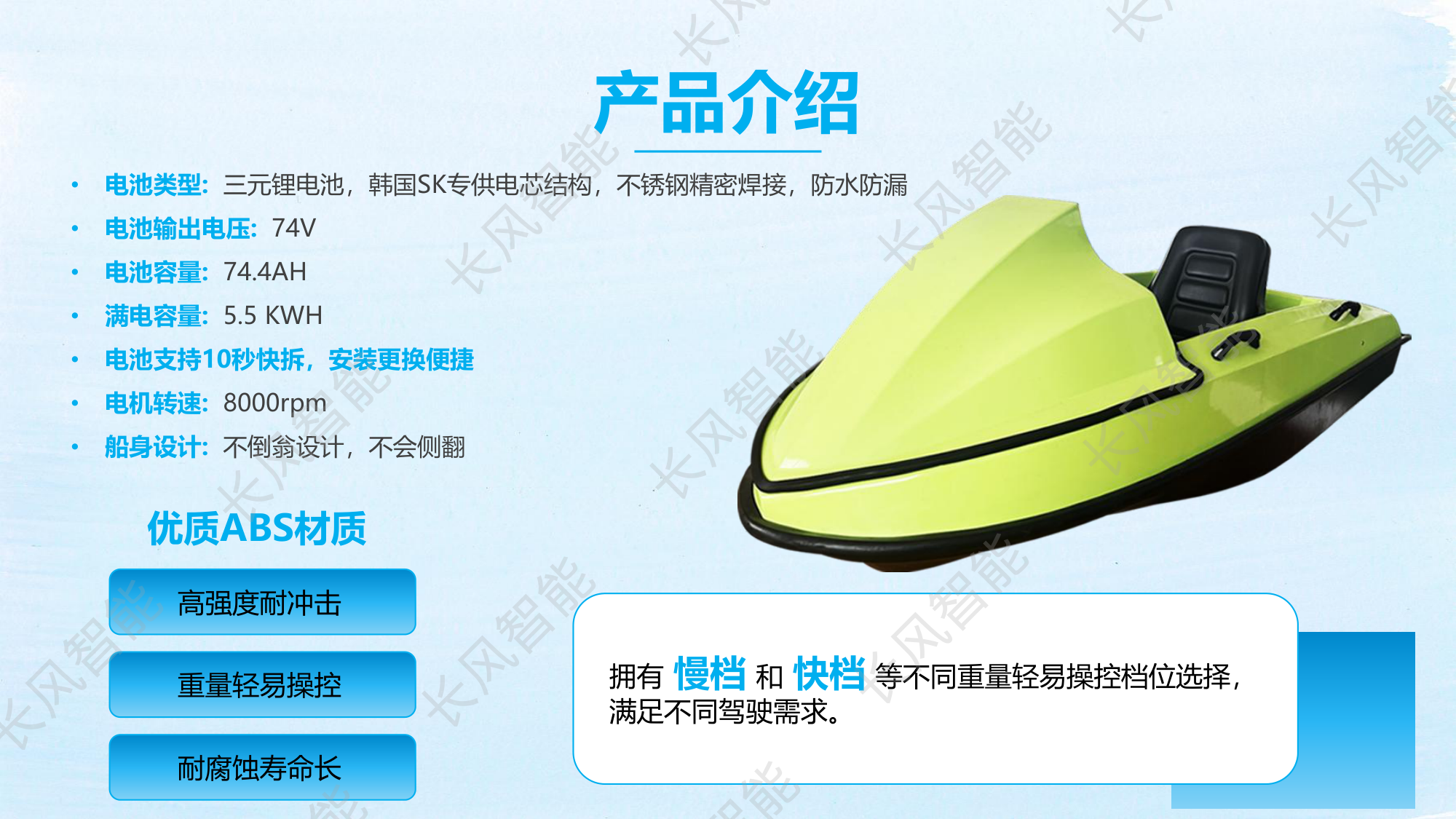
Quick answer: A kart boat is a small watercraft that pairs a go-kart-style cockpit — steering wheel, seat, throttle — with a purpose-built hull, driven by an electric motor (typically 6–18 kW) at top speeds of roughly 40–60 km/h. Single-seat electric models listed between $2,400 and $6,900 on B2B platforms in 2026. For rental operators, a 10-boat kart boat fleet (about $50,000 landed) can break even on operating costs within the first season under moderate utilization — the deciding variable is season length, not riders-per-day. This guide covers specs, types, costs, the rental math, buying from China, and compliance in one place. Kart boats (also searched as go kart boats, water go karts, or electric kart boats) have consolidated fast as a product category: today nearly all volume comes from Chinese manufacturers, with the supply side intensely competitive and, until recently, almost entirely opaque on price and specifications. If you are evaluating them for a resort, water park, campground, or rental fleet — or as a dealer — this page gives you the complete picture with sources and dates, then links to our deep-dive guides on each subtopic.
What Is a Kart Boat, Exactly?
A kart boat is what happens when you put a racing kart's cockpit on a boat hull. The rider sits low, steers with a wheel (not handlebars), and modulates speed with a pedal or thumb throttle — the same muscle memory as land karting, transferred to water. Hulls run roughly 1.8–2.7 meters long, carry one or two riders, and draw little enough water to operate in pools and shallow lagoons. The category overlaps with two neighbors, and the boundaries matter:
- Bumper boats are the pool-side classic: slower, often gasoline or low-power electric, designed for deliberately colliding in a confined pool. Kart boats are faster and steered for open water lines.
- Jet skis (PWC) are stand-up or saddle-rider personal watercraft built for speed and range — and priced and regulated accordingly. Kart boats trade top-end performance for low operating thresholds: no trailer ramp, no license in many jurisdictions, shallow water operation.
- Drift boats / drift karts are a kart boat subtype optimized for controlled slides and 360° spins rather than straight-line speed. Our side-by-side comparison of kart boats, bumper boats, and jet skis breaks the differences down cost by cost.
How Fast Do Electric Kart Boats Go — and How Long Does the Battery Last?
Most commercial electric kart boats reach 40–60 km/h (25–37 mph) at the top end, with family and drift models governed lower for safety. Manufacturer claims in this category have a documented inflation problem — third-party reviews have repeatedly caught marketed speeds exceeding test results — so treat every number as "listed, pending verification." The same skepticism applies to runtime. Listed battery runtime for typical commercial packs falls around 60–120 minutes of mixed-throttle riding, and real-world figures swing with rider weight, throttle profile, and water temperature. Two practical markers: battery packs commonly weigh 28–48 kg (which is why tool-free swap architecture matters so much — see our motor power and payload guide for how capacity, load, and throttle interact), and charging a 72V-class pack at commercial electricity rates costs well under a dollar — the constraint is charging time, not energy cost.
The Main Types of Kart Boats (and Who Each Is For)
Type | Seats | Typical motor | Best for |
|---|---|---|---|
Single-seat sport | 1 | 13 kW class | Parks, resorts, general rental |
Two-seat family | 2 | 6–18 kW | Parent-child rides, resorts |
Racing (single/two-seat) | 1–2 | 15 kW | Competitive circuits, racing rental |
Drift boat | 1 | 13 kW | 360° spins, two-speed play |
| Smart/leisure boat | 1–2 | Low power | Beginners, photo ops, kids' areas | Our own lineup follows this map, with full specification tables on each model page — the SKB-K300 electric karting boat (racing model, 15 kW, 60 km/h listed) is the performance reference point.
Electric vs. Gasoline Kart Boats
Gasoline versions exist, but electric has won the commercial mainstream for concrete reasons:
- Energy cost: electricity runs roughly $0.20 per operating hour versus about $1.50/hour for gasoline at typical 2026 prices — a 7x gap that compounds across a fleet and a season.
- Noise and fumes: electric fleets run quiet enough for resort waterfronts and pool environments where combustion engines are simply not welcome.
- Maintenance surface: no fuel systems, oil changes, or carburetor work; the battery pack is the main consumable (budgeted explicitly — see the battery & maintenance guide).
- Regulatory smoothing: electric units sidestep the emission and noise rules that increasingly constrain gas-powered watercraft on lakes and in city parks — a trend documented in our Mediterranean fleet planning piece. Gasoline retains a niche where grid charging is impractical (remote beaches, mobile operators) — most Chinese factories offer both, and it is a legitimate question to ask any supplier.
What Does a Kart Boat Cost in 2026?
Factory-direct single-seat electric kart boats listed between $2,388 and $6,899 on B2B platforms (Accio/Alibaba) in mid-2026, with branded retail models between roughly $3,500 and $6,600. Two caveats carry the whole section: the same physical boat was observed quoted at five prices — a 5.5x spread — across channels, and the listed price excludes the 30–50% landed-cost add-on that freight, duties, and VAT typically bring depending on destination (from ~+6% for Malaysia to +48–86% for Mexico/Brazil, per freight-forwarder data compiled July 2026). The full breakdown — model-by-model price snapshots, the five-price case study, regional landed-cost tables, and how to normalize quotes — lives in our 2026 kart boat price guide.
Is a Kart Boat Rental Business Actually Profitable?
The unit economics are unusually forgiving, which is why kart boats (and their bumper-boat cousins) keep spreading through parks and resorts. Using mid-2026 market data:
- Revenue: at a typical $70/hour kart boat rental rate, one boat grosses roughly $140–420/day at 2–6 sessions.
- Breakeven threshold: a fleet of just 4 boats running 4 hours/day each covers operating costs — utilization requirements are low because the boats themselves are inexpensive relative to theme-park-scale rides.
- Payback: a 10-boat kart boat fleet (~$50,000 landed) models out to roughly one month to recover capital expenditure and 3–4 months for full investment at neutral utilization over a 150-day season. Two honest warnings. First, season length is the biggest variable, not utilization: operating days range from ~100 (northern US, Europe outdoors) to ~250 (tropics, indoor), a 2.5x revenue spread — climate and site selection decide more than marketing does. Second, beware of viral business-plan math: the industry-circulated plan claiming "50% utilization, 365 days, ~80% margins" collapses under its own assumptions; realistic net margins run 40–65% for pure rental and 15–30% when bundled into a full entertainment venue. Test your own numbers in the commercial ROI worksheet, and read the bumper boat rental business breakdown for the full revenue model.
How to Buy a Kart Boat from China Without Getting Burned
Most kart boats are manufactured in China, and most buyer horror stories trace to the same handful of failure modes — battery documentation missing, parameters inflated, wire-transfer-only suppliers vanishing, or boats that cannot legally clear customs. The defensive playbook:
- Pin the configuration in writing before paying — hull material, motor power, battery capacity and cell brand, charger spec, and the full document set. Our 12 questions to ask a kart boat manufacturer is the checklist.
- Treat battery paperwork as a deal-breaker. UN 38.3 test summaries and MSDS determine whether your boat ships at all (lithium packs move as Class 9 dangerous goods). See the CE / FCC / UN 38.3 compliance overview for what each document attests.
- Inspect before shipment — hull integrity, battery lockout, kill-switch function, throttle sweep. The pre-shipment inspection checklist lists the seven checks that catch the expensive failures.
- Pay through protected channels (trade assurance, credit card, L/C). The Reddit consensus — "never purchase anything from Alibaba by wire" — exists for a reason, and one documented happy-buyer path (a Canadian dealer with local warranty support) got there precisely by adding a local service layer and protected payment.
- Mind the HS classification. Kart boats clear customs under either 8903.99 (pleasure vessels; US MFN 1.7–2.7%) or 9508.29/9508.30 (amusement equipment; often 0% or low duty, and the EU's 2026 CN explicitly lists bumper boats under 9508.29). The difference is real money — apply for a binding ruling before your first shipment. The complete end-to-end process, from RFQ to delivery acceptance, is in the commercial procurement guide.
Compliance and Safety: The Short Version
Requirements cluster by market, and the pattern to internalize is that small electric watercraft often fall between regulatory regimes — which does not mean unregulated:
- US: no small-vessel exemption — hulls under 16 ft still need HIN numbering; EPA Form 3520-21 applies even to electric; USCG construction standards and state registration apply.
- EU: hulls under 2.5 m fall outside the Recreational Craft, Toy Safety, Machinery, and LVD directives' mandatory scope, but EMC and the 2023/1542 battery regulation (Notified Body involvement ≥2 kWh) plus REACH/RoHS still apply.
- Gulf & Southeast Asia: Saudi SASO Saber certification per batch, UAE ECAS (220V charger), Indonesia's SNI for lithium batteries (8–12 weeks, local entity required — the single biggest barrier in the region), Thailand TISI, Malaysia SIRIM.
- Everywhere: UN 38.3 for battery transport. Venue-side requirements matter as much as product-side: bumper-boat pools typically run 50–60 cm deep with roughly 6–7 boats in a 12×6 m pool, and some jurisdictions require a boating license above 15 kW — confirm both with your local authority before ordering. The current document landscape per topic lives in our buyer trust center.
What Guests Actually Complain About (and How Good Suppliers Answer)
The buyer-pain research behind this guide is blunt: the top two concerns are battery safety (lithium fires on water; unverifiable cells in cheap imports; 48–50°C Gulf summers accelerating degradation) and trust — "is [brand] a scam?" is the first question on every forum thread about Chinese watercraft. Close behind: parameter inflation, missing spare parts, and quotes that quietly exclude freight. The practical filters: real photos over renders (the category's render-only habit is a red flag in itself), named battery suppliers, written warranty terms with claim steps, and a spares package sized to your fleet. These map one-to-one onto the assurance checkpoints we publish — and onto the questions in the manufacturer checklist above.
FAQ
What is a kart boat? A small watercraft combining a go-kart cockpit (wheel, seat, throttle) with a boat hull, usually electric (6–18 kW), reaching 40–60 km/h. Searched variously as go kart boat, water go kart, or electric kart boat — all the same category. Do you need a license to drive a kart boat? Often no for lower-power models in pool and lagoon venues, but some jurisdictions require a boating license above 15 kW, and commercial venue operation typically needs local approval regardless. Confirm with the local maritime authority before purchase. How long does a kart boat battery last per charge? Listed runtimes cluster at 60–120 minutes of mixed-throttle riding; real figures vary with rider weight and throttle use. Battery packs commonly weigh 28–48 kg and are the main lifetime consumable. Are kart boats safe for kids? Family two-seat models with speed governing and kill-switch lanyards are designed for parent-child use; drift and racing models are adult-oriented. Pool depth (~50–60 cm), staff supervision, and maintenance discipline matter more than the boat label — see the maintenance guide. How much does a kart boat cost? $2,388–6,899 factory-direct on B2B platforms in mid-2026, plus 30–50% typical landed-cost add-ons by destination. Full price tables and the 5.5x quote-spread case study are in the price guide. Kart boat vs jet ski — which should a venue buy? Different tools: jet skis deliver speed and range for adult riders at 5–10x the unit cost with heavier licensing; kart boats deliver higher throughput per dollar in shallow, controlled waters. The comparison guide breaks down cost per session. How many kart boats fit in a pool? Roughly 6–7 boats in a 12×6 m pool at 50–60 cm depth, per bumper-boat venue standards; kart boats need somewhat more room per boat at speed. Site layout is part of our turnkey planning service. Is a kart boat business profitable? The breakeven threshold is low — about 4 boats running 4 hours/day — and 10-boat fleets model to 3–4 month full-investment payback in a 150-day season. Season length and climate decide more than utilization; test your own numbers in the ROI worksheet.
The Short Version
Kart boats work as a product category because they hit an unusual sweet spot: theme-park thrill at go-kart capital cost, electric simplicity at jet-ski fun, with the lowest breakeven threshold of any water-based ride we know. The risks are concentrated in sourcing — documentation, parameters, and supplier trust — which is exactly why our guides lean so hard on verification. Browse the electric kart boats lineup, send us your water area and destination, and we will spec a fleet you can verify line by line. Specification and price figures on this page are manufacturer listings and market snapshots compiled July–August 2026 from public sources (B2B listings, third-party reviews, freight-forwarder and customs data); they change without notice and are verified per order.
Get a Quote for Your Kart Boat Business
Tell us what you need — OEM/ODM specs, quantity, target market. Our team replies within 24 hours.
Prefer a quick chat?
Chat on WhatsAppFree B2B resources
Buyer guides, ROI calculators, customs checklists, and case studies — built on direct factory manufacturing experience.